
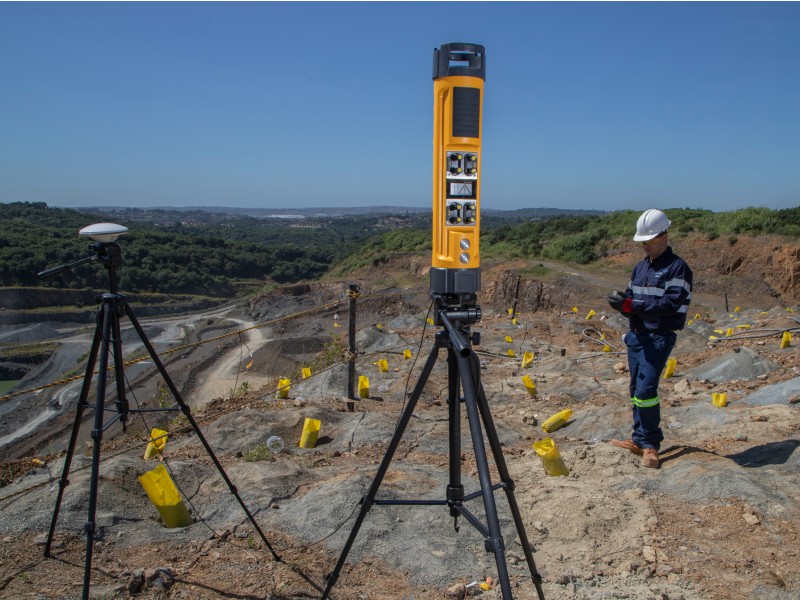
Description
Electronic Initiation Global Positioning System (EGPS)
Market Overview
Precision, traceability and environmental compliance are driving adoption of location-aware initiation systems in modern blasting. The EGPS combines GNSS positioning and timing with electronic initiation to deliver synchronized, auditable initiation events tied to exact site coordinates — improving blast design accuracy, reducing operational risk, and simplifying regulatory reporting.
For authoritative background on GNSS fundamentals and timing applications, see GPS fundamentals and timing resources ↗.
Product Information
EGPS is offered as a modular system: GNSS timing modules, initiation controllers, rugged field terminals, and secure software for programming and post-blast analytics. Units are factory calibrated for timing accuracy and GNSS performance; firmware and secure keys are provisioned only to credential-verified organisations. The system supports encrypted programming, event logging with geotagged timestamps, and interoperability with authorised electronic detonators and firing controllers.
Non-operational notes:
-
EGPS hardware and software are provided to licensed, credential-verified buyers only.
-
SDS, compliance certificates, and technical packs are released after buyer verification.
-
Operational protocols and programming credentials are supplied through authorised channels to accredited personnel.
For practical GNSS application guidance, review the European GNSS Agency resources ↗.
Product Technical Specifications
| Parameter | Specification |
|---|---|
| Product Name | EGPS — Electronic Initiation Global Positioning System |
| GNSS Support | Multi-constellation (GPS, GLONASS, Galileo, BeiDou) — RINEX/RTK capable |
| Timing Accuracy | Sub-millisecond GNSS disciplining to controller clocks (site dependent) |
| Position Accuracy | Sub-metre with RTK/PPK; metre-level with standard GNSS (site dependent) |
| Initiation Interface | Compatible with authorised electronic detonators and controllers |
| Diagnostics | Geotagged readiness checks, continuity tests, event logging |
| Security | Encrypted programming, authenticated keys, tamper detection |
| Power | Sealed battery options; site power compatible |
| Housing | IP66/67 rugged enclosures, corrosion resistant connectors |
| Environmental | Temperature & humidity rated for mining/tunnel environments |
| Documentation | SDS, calibration reports, QA certificates (to verified buyers) |
Technical Features
-
GNSS-synchronised timing: EGPS disciplines initiation controller clocks to GNSS time references for consistent millisecond sequencing across wide areas.
-
Geotagged audit trail: Every programmed delay, continuity check and firing event is stored with GNSS coordinates and time stamps to support post-blast analysis and compliance reporting.
-
RTK/PPK compatibility: Option for survey-grade positioning (RTK/PPK) to support precise geolocation of hole collars and initiation points.
-
Robust diagnostics: Integrated, location-aware pre-blast readiness checks reduce human error in acceptance testing.
-
Secure provisioning: Encrypted firmware, authenticated keys and tamper alarms protect programming and prevent unauthorised use.
For technical reference on global GNSS services and institutional resources, see International GNSS service & standards ↗.
Applications & Benefits
Mining & Open-Pit Blasting
EGPS enables large-area coordination with consistent timing across multiple benches, improving fragmentation control and reducing flyrock and vibration by enabling precise delay architectures.
Tunnelling & Underground Works
When combined with tunnel survey data, geotagged initiation control improves excavation sequencing while supporting vibration monitoring and protection of adjacent structures.
Civil & Infrastructure Demolition
EGPS provides traceable, time-stamped initiation records that help satisfy regulatory audits and community reporting requirements for urban blasting.
Key Benefits
-
Improved fragmentation and recovery through precise timing and positioning.
-
Streamlined regulatory reporting with geotagged event logs.
-
Reduced misfires and human error via automated, location-aware diagnostics.
-
Enhanced security and auditability with encrypted records and authenticated provisioning.
Quality Control & Validation
EGPS systems undergo rigorous factory calibration and acceptance testing: GNSS performance verification, timing discipline validation, environmental stress testing, EMI/EMC checks and initiation interface verification. Certified suppliers provide calibration reports, batch traceability and QA documentation to verified purchasers for audit purposes.
Safety, Storage & Transport
EGPS hardware is non-explosive but interfaces with regulated initiation systems. Handling, storage and transport of initiation controllers and related equipment must follow national explosives legislation and dangerous goods regulations where applicable. SDS and compliance documentation are released only to credential-verified buyers.
Environmental & Community Considerations
Geotagged initiation control and improved timing reduce peak particle velocity (PPV), dust and flyrock risks when integrated into a proper blast management plan. The EGPS also facilitates post-blast environmental monitoring and community reporting through precise, auditable records.
Supply Chain, Training & Technical Support
Authorized distributors offer: system provisioning, GNSS calibration/RTK setup services, operator training referrals (non-operational overview and safety), post-blast analytics, and secure firmware/credential management. Suppliers will verify credentials before releasing technical packs and programming keys.
The Electronic Initiation Global Positioning System (EGPS) unites GNSS precision with electronic initiation control to deliver location-aware, millisecond-synchronised blasting. Designed for licensed operators, EGPS improves fragmentation, enhances safety and traceability, and simplifies compliance through geotagged audit trails and robust diagnostics.


Reviews
There are no reviews yet.